

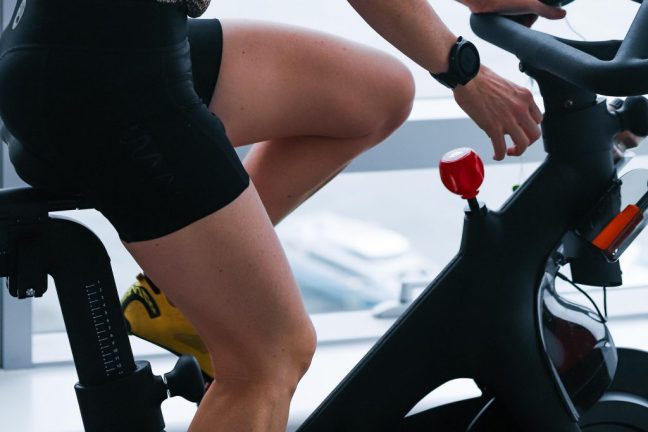
NOTE: This is NOT a political posts on energy policy! This IS a post about indoor cycling drills you can use to increase awareness, strength, endurance, and fun…while increasing class engagement and active participation.
Another benefit of incorporating structured drills…class time passes quickly!
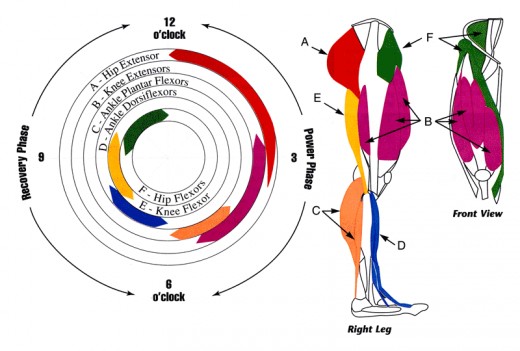
Isolated pedaling – two varieties: pick a leg and focus on the push/pull movement, or pick a leg movement and only push or only pull with both legs. Continue either version for 30-45 seconds and switch to the other leg or movement…repeat once or twice to complete the drill. Either drill is best in the first half of the class and helps riders focus on an ideal, synchronized pedal stroke.
Jumps (lifts) – two varieties: Jumps (on flat) or Jumps on a hill. The pace of alternating between seated / standing movements and amount of resistance are the primary variables with Jumps.
Jumps on flat are quicker (alternating at a 2-4 count pace) with light-moderate resistance while Jumps on a hill are slower (6-10 count pace) with moderate-heavy resistance.
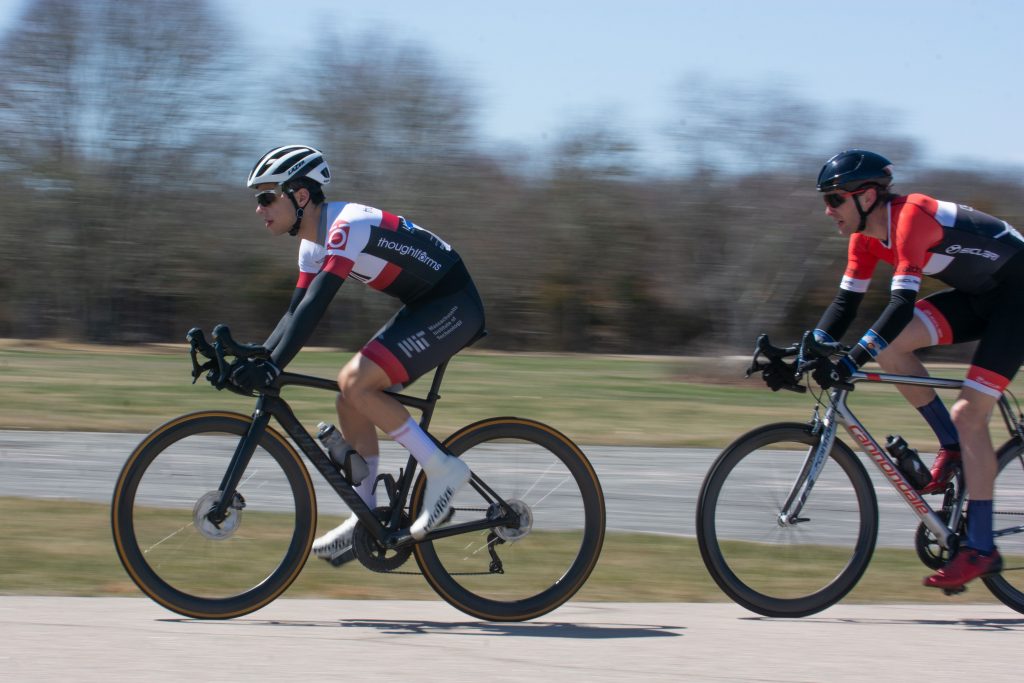
Sprints (spin-ups / surges) – several varieties: seated, standing, combo, tabata, pace-line, and class participation. While speed is the common theme among any version of a sprint, resistance is still an important part of the drill…moderate resistance is needed to keep it safe. Seated sprints at moderate resistance often start around 95 RPMs and should max out at ~115-120 RPMs. Standing sprints with heavier resistance range between ~85 and 100 RPMs. Combo sprints involve alternating 15-45 second intervals or splitting an interval but standing for the first 5-15 seconds before moving into a seated sprint for the remaining 15-30 seconds. Tabata sprints typically use a 2:1 work vs. recovery format…10 second intense sprint with 5 second recovery. Other variations include 20 sec sprint / 10 sec recovery or 30 sec sprint / 15 sec recovery. Pace-line sprints are best done with visualization…being part of a pack of cyclists in a paceline formation, moving from the front of the pack to the back and then racing/sprinting back to the #1 position. This drill repeats 2-3 times.
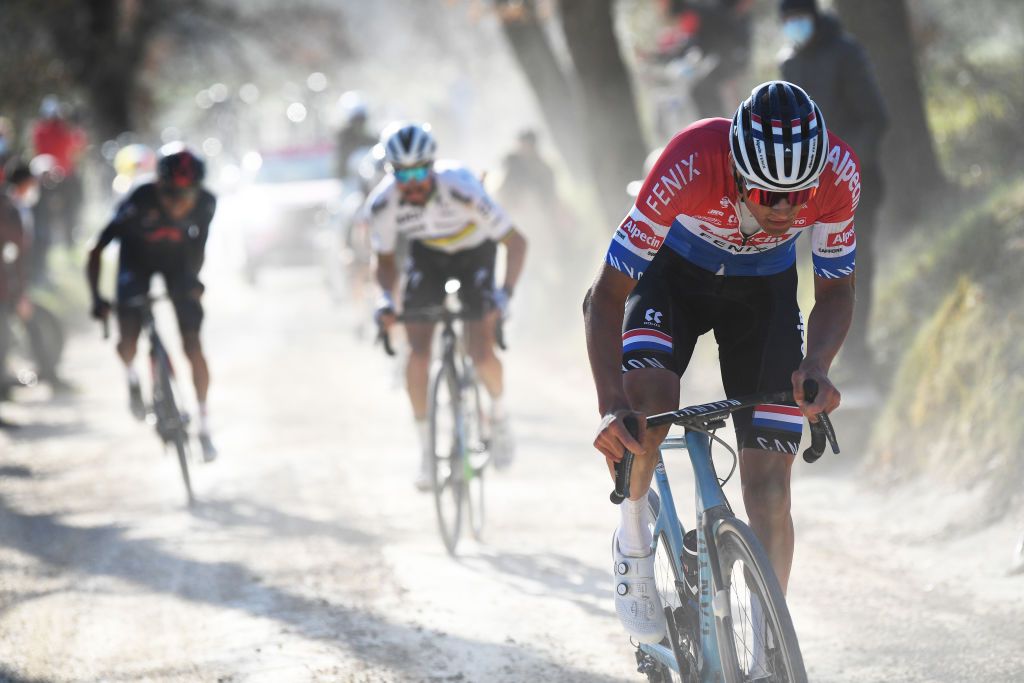
Hills or climbs – several varieties: moderate, heavy, progressive, power/attacks (surge), combo, rolling. The common themes for any variation of a hill climb: slower cadence (RPMs in the upper 50’s to low 80’s), heavier resistance (gear in the mid to upper range). Not all hills are created equal…shorter (3-4 minutes), longer (5-8 minutes), variable (resistance setting and/or seated/standing position), power climbs are quicker while resistance level stays in the top 30% setting. Rolling hills are best done with the added benefits of visualization…climbing a series of shorter hills, each climb followed by a quick downhill run (lighter resistance and ~95-100 RPMs). Each hill gets steeper than the previous. Attacks on a hill (running with resistance, ramps) are typically done in the standing position, with both moderate-high resistance, at a moderate-high cadence…to the point of breathless (an max heart rate).
Head winds – moderate, heavy, progressive, combo. Much like a hill / climb, these head wind drills emphasize increased resistance at a steady cadence. Drills include alternating the intensity of resistance (like 50% head wind / 50% no/light wind), are steadily increasing the head wind (aka resistance) over a ~3-5-minute track. Over the course of a 45–60-minute class, the intensity should increase up to the final drill.
Sit/Stand combo – A 5-8 minute “trance” track is best for this drill. The ideal version of this drill is a ~7-8-minute track where the first 60 seconds are in the seated position. For the 2nd minute, 10 seconds are standing and remaining 50 seconds are seated. The 3rd minute starts with 20 seconds standing, followed by 40 seconds in the saddle. And the progression continues until the 7th minute…all 60 seconds standing. Shorter and longer variations include a 5-6-minute option where the minute is broken down into 15-second segments or a 13-14 minute option where the minute is broken down into 5-second segments.
Figure Eight (Four Corners) – This is one of those “contra-indicated” movements that is best done as an optional modification on a Combo Climb. Like a tap-back, this movement focuses on the rhythm of the music while adding a forward/backward movement with a side-to-side movement too.
Endurance – Whether its on a big hill or long stretch of flat road, these extended duration drills emphasize longer (5+ minutes) segments at a steady state (both cadence & resistance) to help build stamina.
Back to the Basics: a quick refresher of the nine Spinning® movements for indoor cycling…and Spinning’s GUIDE TO RIDE:
- Seated Flat
- Standing Flat
- Seated Hill
- Standing Hill
- Sprints (on flat)
- Sprints on a hill
- Jumps (on flat)
- Jumps on a hill
- Running on a hill…with resistance (attacks on a hill)

Spinning® Guide to Ride (updated 2019 edition)
Other resources:
https://www.rei.com/learn/expert-advice/indoor-cycling-workouts.htmlhttps://www.wahoofitness.com/blog/indoor-cycling-drills-that-build-strength-and-efficiency/
https://www.crunch.com/thehub/spin-workout-drills/https://www.wahoofitness.com/blog/indoor-cycling-drills-that-build-strength-and-efficiency/
Indoor Cycling Drills that Build Strength and Efficiency
Enjoy the Ride!
 FTRI FOR music playlists, FOR ride profiles, FOR guest posts, FOR studio reviews & more!